How to Achieve Sustainable, Software-Defined Manufacturing
Our world will always rely on manufacturers to produce the goods and materials we need to keep our economies and businesses running. Yet, those same manufacturing operations are severely impacting our planet’s health. For example, CO2 emissions released by global fossil fuel combustion and industrial processes rose by roughly 35% over the last 20 years.
Manufacturing has a profound impact on the environment, and it’s time for a significant overhaul of traditional processes that are no longer the only option.
A Wake-Up Call
The good news is that organizations are already implementing changes for a healthier, more prosperous future.
Businesses across all sectors now have more focus on environmental, social, and governance (ESG) issues than ever before, as investors, partners, and customers are increasing the requirements of their vendors to abide by specific ESG protocols. In addition, customers aren’t only demanding change in how manufacturers produce but what they produce as well. A survey of C-suite manufacturing leaders showed that more than half of respondents feel that, of all the evolving customer needs, the growing demand for sustainable products is having the largest impact on operations.
Manufacturers feeling pressured to evolve their operations quickly — who are overwhelmed with tackling ESG, supply chain, and digital evolution challenges all at once — need to lean on modern technology to help them navigate the change.
A Sustainable, Software-Defined Future
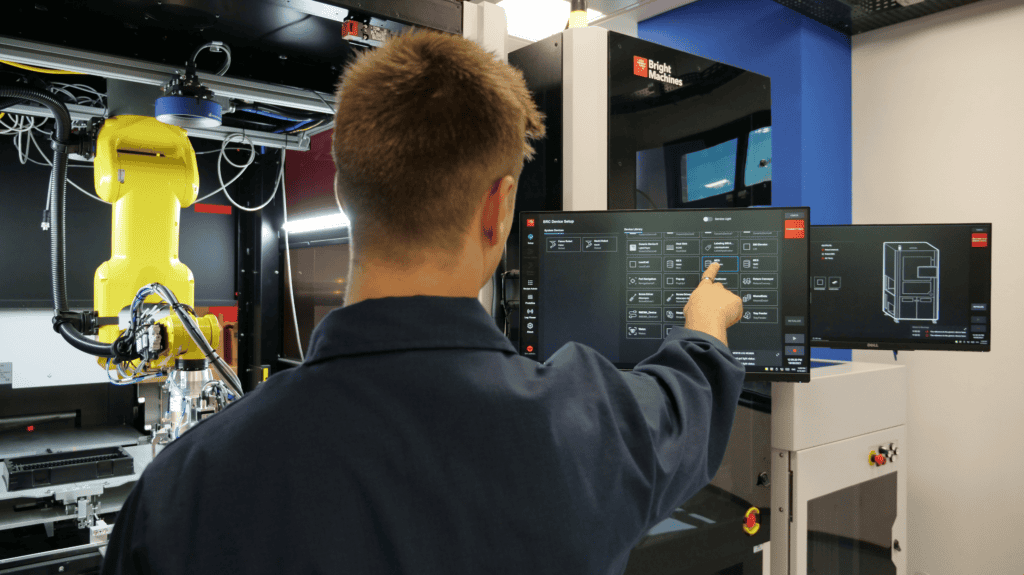
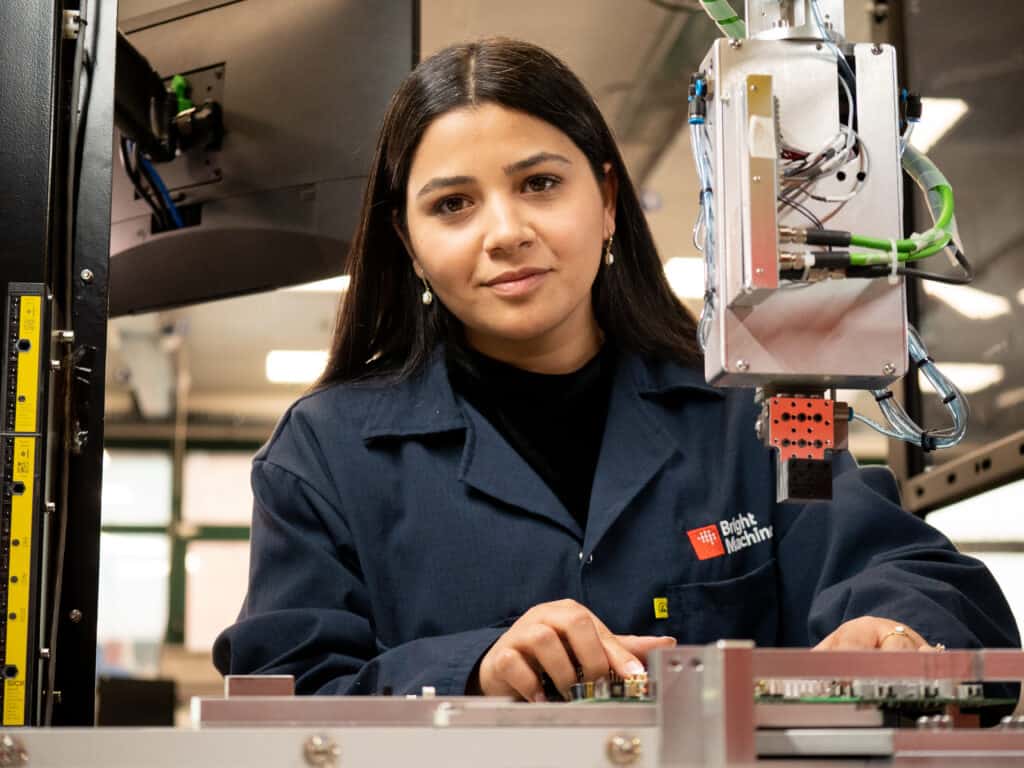
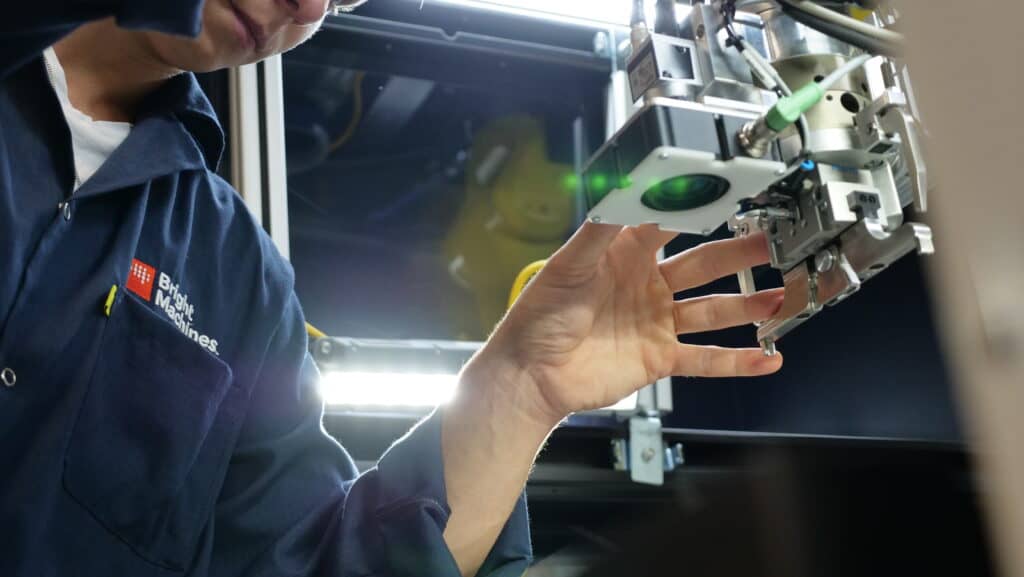
The manufacturing industry’s impact on the environment is a big problem, and it’ll take a big shift in production to solve it. That’s where the power of automation comes in — and it’s why Bright Machines is dedicated to designing and delivering intelligent automation solutions that help transform manufacturing from a slow, stiff, resource-intensive industry to one that’s fast, flexible, and eco-friendly.
Other tools and technologies (i.e., robotics, cobots, virtual reality, digital twins) are helping manufacturing organizations implement new processes that lead to more sustainable operations, too. But which solutions are the most impactful?
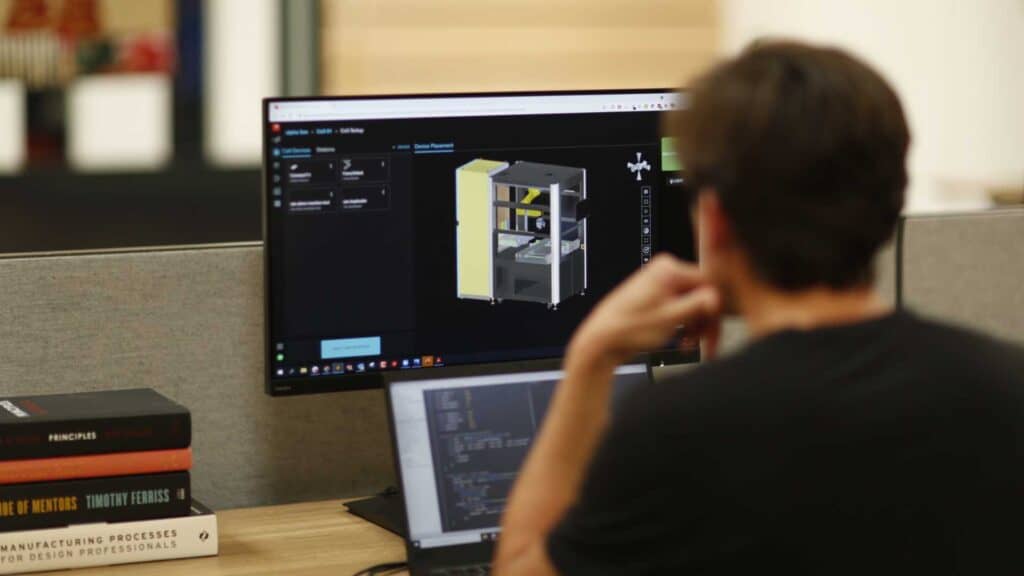
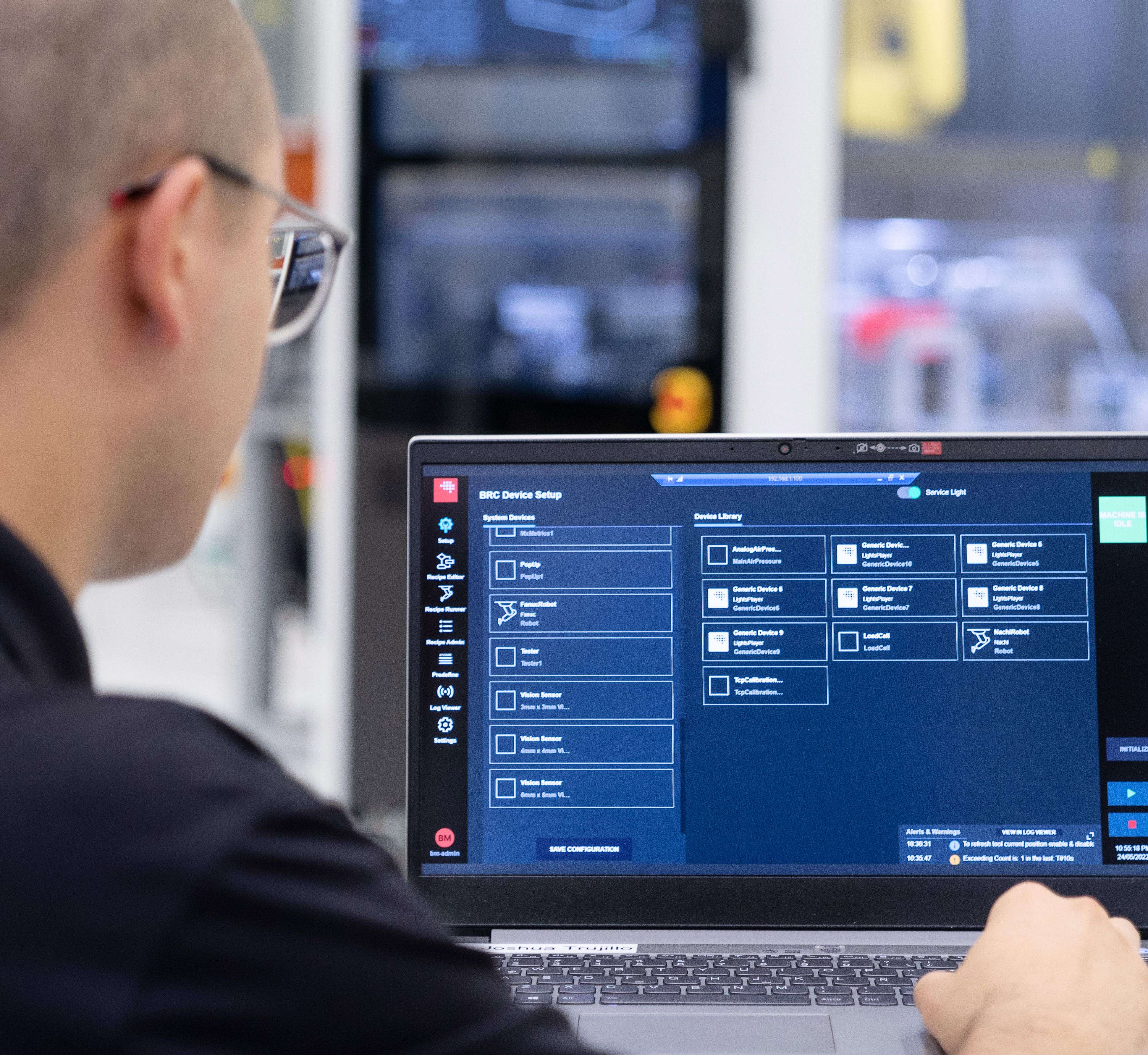
The North Star for any manufacturer ready to increase efficiency, improve quality, and introduce greater sustainability is a software-defined approach. This approach leverages intelligent automation solutions such as Bright Machines Microfactories that have cloud, machine vision, and artificial intelligence capabilities built in from the start, which introduce a whole new level of elasticity and resiliency into the production line and onto the factory floor.
Here’s what manufacturers can achieve with a software-defined manufacturing approach:
- Reduced waste and carbon footprint: Bright Machines’ intelligent automation regularly assesses areas of production that can be adjusted so that manufacturers can better understand which resources or materials they need more or less of and where maintenance is needed to help reduce faulty products that result in waste. Additionally, manufacturers who move production closer to the end consumer and build or revamp factories with intelligent automation can reduce overproduction and instead produce-to-order based on local market demand. This cuts down on wasted products and helps to reduce the operation’s carbon footprint.
- Greater flexibility and efficiency: Flexible, intelligent solutions offer programmable assembly lines and enable faster product changeovers when the market demands it. Lines are modular, reconfigurable, and reusable over time and can therefore achieve higher utilization.
- New revenue streams: Manufacturers searching for new ways to reduce, reuse, and recycle may be able to introduce additional revenue streams in the process. For example, if a manufacturer invests in technology that improves the complex, error-prone disassembly and end-of-life processing of technology solutions such as servers, they could turn around and sell still-viable pieces and components to global technologies that want spares in their inventory.
The future of manufacturing will need to include a sustainable, software-defined approach. Organizations that embrace the new tools and technologies that contribute to more efficient, eco-friendly operations will have a smoother, faster pathway to near-term and long-term success.
To learn more about our offerings, please visit our Capabilities page.